Bring the aircraft back to a known condition.
Start with the aircraft, its history, and the symptoms you can observe. Inspection determines what can be serviced, what may need replacement, and what should happen next.
Request a service assessment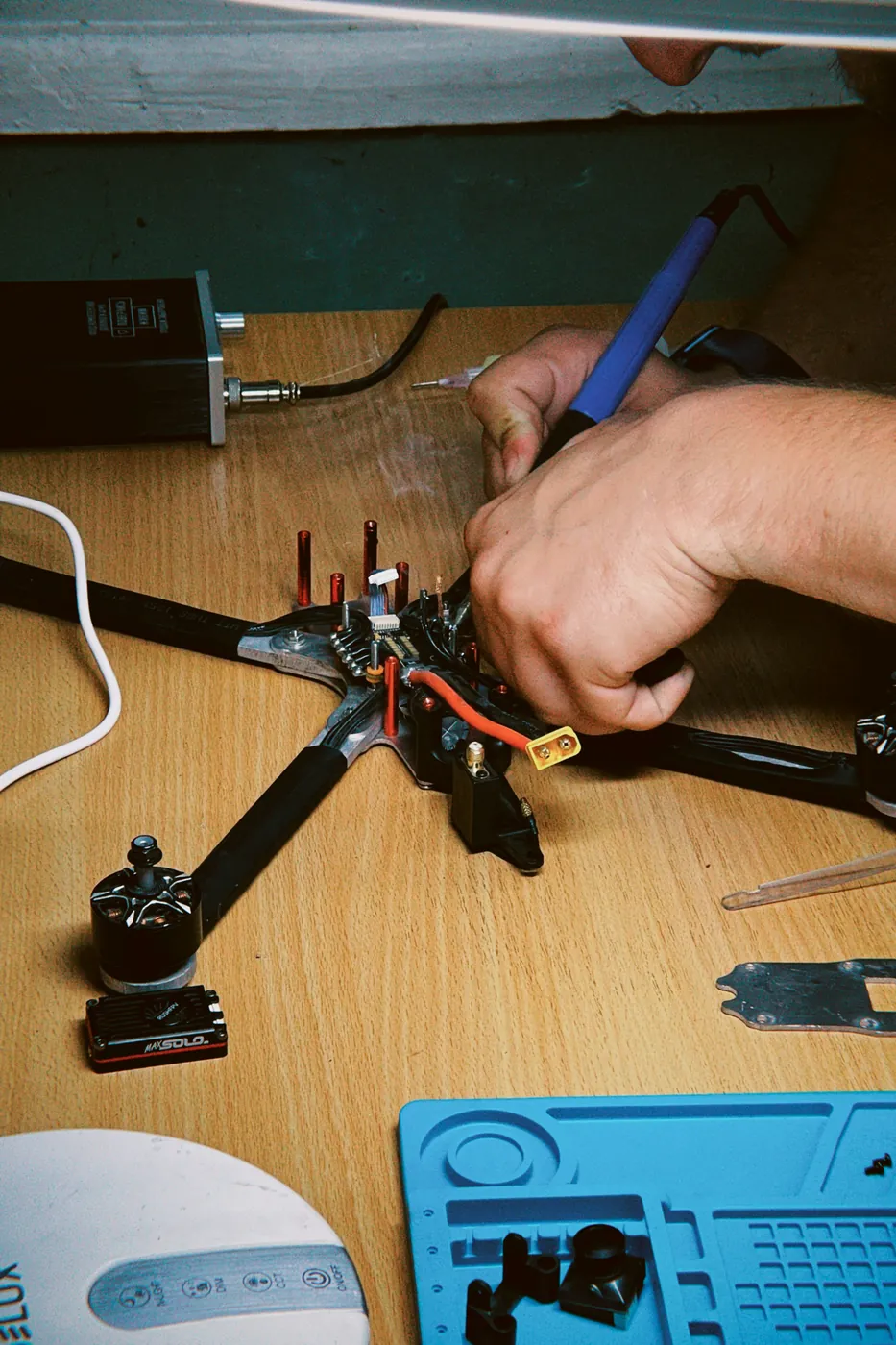
Begin with the fault, not an assumption.
Service recommendations depend on the make, model, configuration, damage history, parts availability, and findings from inspection.
- Crash and damage assessmentVisible structure, arms, landing gear, propellers, mounts, and connected components.
- Propulsion and power checksMotors, electronic speed controllers, batteries, power distribution, and related connections.
- Flight-control diagnosisObserved control, sensor, navigation, communication, or software-related symptoms.
- Firmware and calibrationApplicable updates, configuration review, and sensor calibration after the scope is agreed.
- Preventive servicingCondition checks and maintenance planning before repeated field use.
Compatibility, repairability, parts, price, turnaround, and any flight verification are confirmed only after assessment.
A service trail you can follow.
Each step narrows uncertainty before work proceeds.
- Intake
Share the model, issue history, incident details, photos, current symptoms, and available accessories.
- Inspection
The aircraft is reviewed for visible, mechanical, electrical, power, control, and configuration concerns relevant to the reported issue.
- Recommendation
Receive the proposed work, parts implications, limitations, estimate, and approval point before repair begins.
- Service and checks
Approved work is completed, followed by applicable calibration and functional checks.
- Handover
Receive a summary of work completed and any follow-up or operating recommendations.
Take the technician pathway with you.
Review the component, assembly, calibration, fault-finding, maintenance, safety, and documentation modules in a concise Precision Airborne guide.
Precision Airborne brief · PDF · 3 pages